
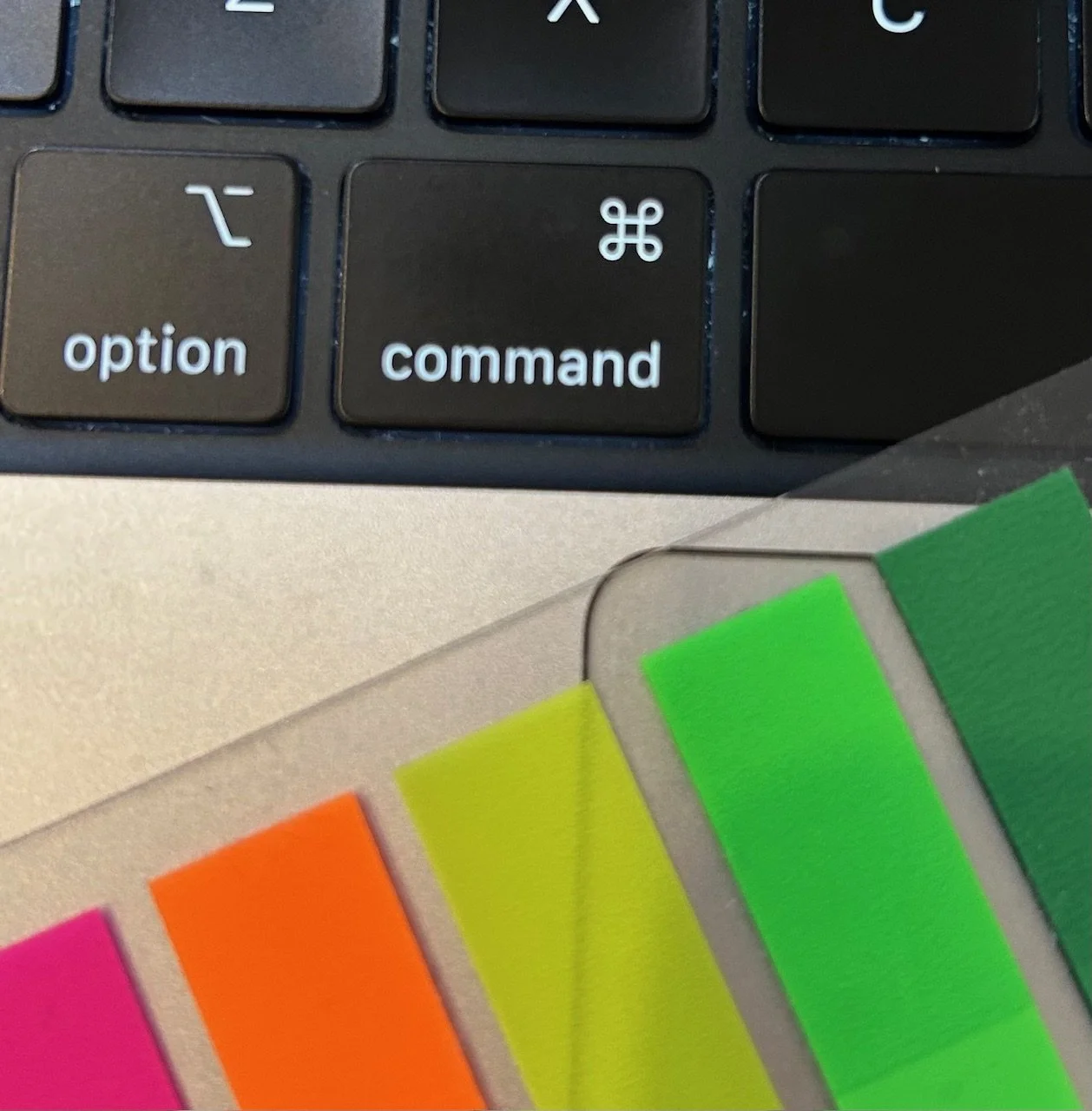
I was about to add a smiley emoji to my email subject line. This apparently requires the ‘command’ button. I have a bit of a reaction when I hear that word, as I spend a lot of time thinking and talking about how language matters. It’s used in the tech space, and that makes sense. Certainly with animals, command is not the right word, but I still hear it a lot.
Can we switch to ‘cue’?
Meaning matters
When I say it’s not the right word, the meaning just doesn’t match what we’re describing. A ‘cue’ is a signal that a something ‘can happen’, dependant on the dogs behaviour. A simple example; if we’ve trained a sit cue, it’s a signal that if the dog puts its bottom on the floor, he can make a good thing happen. It’s not an order, and the dog has to understand the cue and be more motivated to do it than possibly something else.
Commands can carry concerning connotations
The word command sends us down the wrong path in the broader sense. It can feed into myths around dog training that have long been debunked. My dog is trying to control me so I need to give the orders?! Command carries an expectation that the dog should do something, and if they don’t then numerous labels are often used, like the dog is stubborn, lazy, not listening. These labels can change the way we interact with our dogs and so become even more unhelpful.
Considering a ‘cue’
Not in any workplace would we dream of using the word command. Language is important. When your boss, or even the CEO requests something, it's not an order, but it IS going to be worth your while. When thinking about what we request of our dogs, good questions to ask would be how did we train a cue, did we build it up over many repetitions, in gradually more distracting places. Did we train it in a fun way? What else has happened that day, what else is going on in the environment, and how is the dog feeling now? (When everything else has been considered, don’t forget pain or discomfort which will affect any dogs behaviour.)
The bottom line is what we say matters. The language we use affects our take on situations and so our actions too. Even using a word like ‘ownership’ can have welfare implications (Henning et al., 2023). I always choose words like pet guardians or caregivers, because they are explicit reminders of the inherent responsibility and duty of care that we can all agree exist when it comes to the animals in our lives. I’m always looking to highlight my values as an ethical and evidence-led practitioner so here’s to #cue and #caregiver.
Henning, J. S. L., Costa, A. G., & Fernandez, E. J. (2023). Shifting attitudes on animal ‘ownership’: Ethical implications for welfare research and practice terminology. Research Ethics, 19(4), 409–418. https://doi.org/10.1177/17470161231186060